The Question Many Homeowners Have But Rarely Think to Ask
Spring arrives across Dutchess County and the instinct to garden takes over. Homeowners start planning raised beds, perennial borders, vegetable patches, and ornamental shrubs, and sometimes the most convenient or sunniest spot on the property happens to sit right above or near the septic system.
It’s a situation we encounter regularly, and the answer to whether gardening near a septic system is safe is more nuanced than a simple yes or no. Some plants are perfectly compatible with septic system proximity. Others can cause serious and expensive damage. And the area directly above the drain field, the network of buried pipes that treats and disperses wastewater into the soil, requires particular care regardless of what’s being planted.
Understanding the relationship between your landscaping choices and your septic system protects both your garden investment and the system underneath it. We’ve put together this guide to help Dutchess County homeowners make informed decisions about what to plant, where to plant it, and what to avoid entirely.
Why Landscaping and Septic Systems Don’t Always Coexist Peacefully
What’s Actually Underground
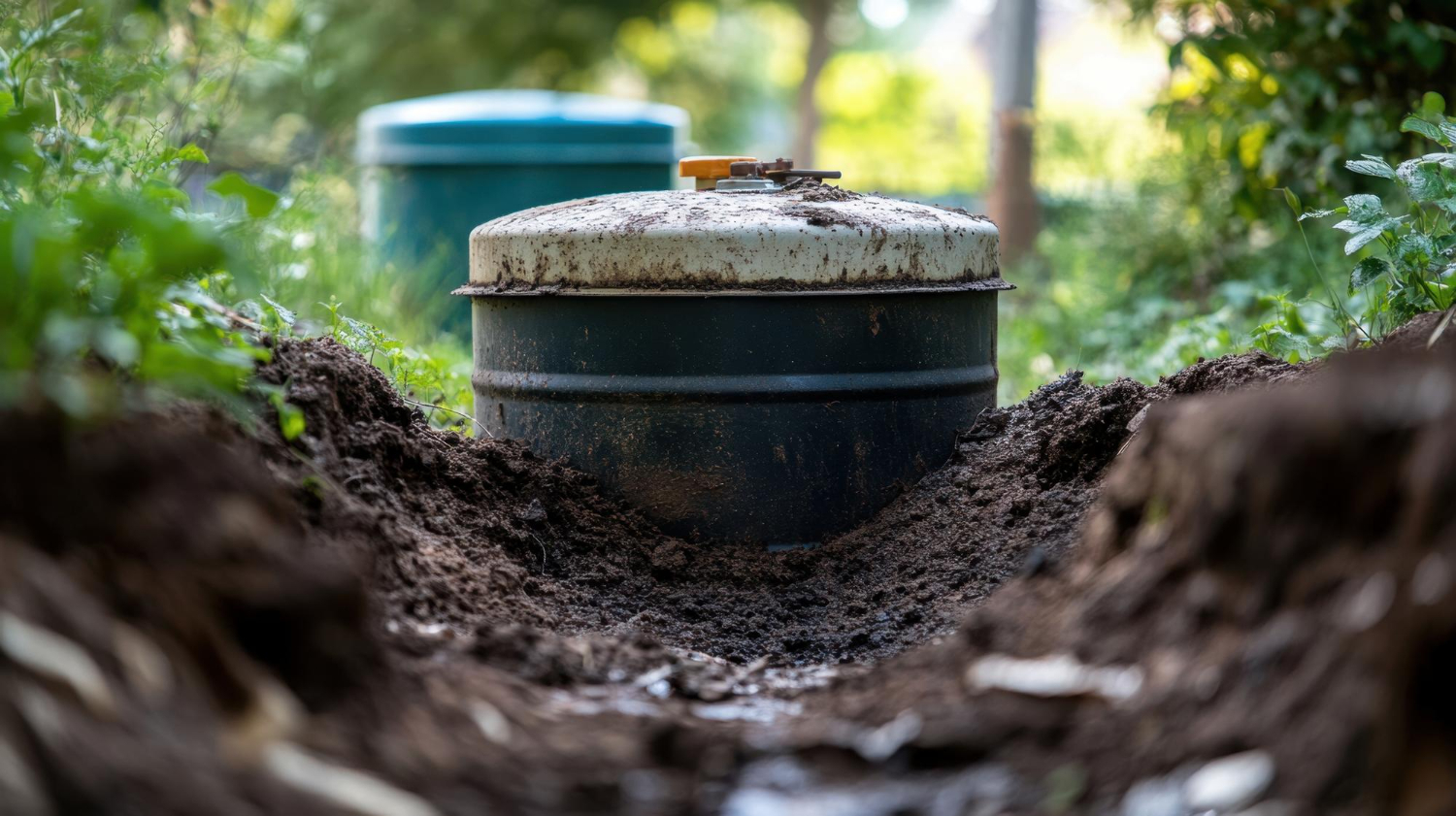
To understand why plant placement matters, it helps to picture what’s buried beneath your yard. A typical residential septic system in our region consists of a buried tank, usually concrete, anywhere from 1,000 to 1,500 gallons, connected by pipes to a drain field. The drain field is a network of perforated pipes laid in gravel-filled trenches, typically 18 to 36 inches below the surface, spread across a defined area of the yard.
That drain field area is doing something critical: receiving partially treated wastewater from the tank and allowing it to percolate slowly through the soil, where naturally occurring bacteria complete the treatment process. The health of the soil in and around those trenches determines how effectively the system treats wastewater before it reaches the groundwater table.
Anything that disrupts the soil structure, blocks the pipes, or introduces contaminants into that zone affects how well the system works, and potentially how safe the surrounding environment is.
The Two Main Risks: Root Intrusion and Soil Compaction
The two most significant landscaping-related threats to a septic system are root intrusion and soil compaction.
Root intrusion happens when plant roots grow toward the moisture and nutrients present in the drain field trenches and pipes. Tree and shrub roots are opportunistic, they follow water wherever it leads. The perforated pipes in a drain field, constantly moist and full of nutrients, are an attractive target. Once roots enter a pipe, they grow rapidly, eventually blocking flow, cracking the pipe, or causing a complete collapse. Root intrusion is one of the most common causes of drain field failure we see in the field, and the damage is rarely minor.
Soil compaction is the other major concern. The soil above a drain field needs to remain loose and well-aerated to support the biological filtration process happening below the surface. When the area is used for heavy foot traffic, vehicle access, or the installation of heavy planters or raised beds with dense soil, the underlying ground compresses. Compacted soil loses its ability to absorb and filter effluent efficiently, contributing to the same saturation and failure process that a root intrusion causes, just through a different mechanism.
What’s Safe to Plant, and Where
The Drain Field Area: Grass Is Your Best Friend
The area directly above the drain field is one where restraint is genuinely the right approach. The plant that causes the least interference with drain field function while providing the most benefit is ordinary turfgrass.
Grass has shallow, fibrous roots that don’t penetrate deep enough to reach the pipes. It stabilizes the soil surface, preventing erosion that could disturb the trench system. It absorbs excess moisture through evapotranspiration, the process by which plants release water through their leaves, which actually helps the drain field function by drawing some of the excess moisture upward rather than letting it pool. And it stays out of the way during service visits, which require access to the tank and, in some cases, the drain field area.
Native grasses and low-growing wildflowers with shallow root systems are also generally safe above the drain field, provided they don’t require significant soil amendment or watering that could alter drainage patterns.
Shallow-Rooted Perennials and Ground Covers
Certain perennial plants and ground covers can be appropriate in areas adjacent to the drain field or at the edges of the septic system footprint, provided their root systems remain shallow and non-invasive.
Generally compatible options include:
- Creeping thyme and other low-growing herbs with minimal root systems
- Shallow-rooted native wildflowers like black-eyed Susan, coneflower, and wild bergamot
- Ornamental grasses with fibrous, non-invasive roots (avoid bamboo entirely, it spreads aggressively and can damage underground infrastructure)
- Ground covers like pachysandra or creeping phlox in areas away from direct drain field trenches
- Bulbs like daffodils and crocuses, whose roots are shallow and don’t penetrate to pipe depth
The key characteristic in all of these is shallow, fibrous root growth that doesn’t seek out or penetrate pipes. The EPA’s SepticSmart program recommends keeping deep-rooted plants well away from septic system components, a guideline we reinforce with every property owner we work with.
Vegetables and Food Gardens: Proceed With Caution
This is the area that generates the most questions and the most concern, and rightfully so. The question of whether it’s safe to grow food near a septic system has both a practical and a public health dimension.
Root vegetables, carrots, beets, potatoes, radishes, should never be grown in soil directly above or immediately adjacent to a drain field. The roots grow downward into the zone where effluent is present, creating a direct pathway for pathogens to reach the edible portion of the plant. Even if the soil appears clean and the system is functioning normally, the risk of contamination is real.
Above-ground vegetables, tomatoes, peppers, cucumbers, beans, present somewhat less direct risk if grown at a meaningful distance from the drain field. However, the CDC’s guidance on onsite wastewater treatment advises against food gardening in close proximity to septic system components because of the potential for soil and water contact with edible crops.
Our practical recommendation: keep vegetable gardens a minimum of 10 to 20 feet from the nearest edge of the drain field. If there’s any uncertainty about exactly where the drain field boundaries are, a professional inspection can locate the system accurately before gardening decisions are made.
What to Avoid Planting Near a Septic System
Trees: The Most Serious Landscaping Threat
If there’s one universal rule in septic-adjacent landscaping, it’s this: don’t plant trees near the drain field or the tank. Tree roots are the single most damaging plant-related threat to septic system infrastructure, and the damage they cause is rarely cheap to fix.
Trees to keep well away from septic components, ideally at a distance equal to or greater than their mature canopy spread, include:
- Willow trees (their roots are extraordinarily aggressive water-seekers and can travel remarkable distances toward a moisture source)
- Poplar and cottonwood trees
- Silver maple and red maple
- Elm trees
- Birch trees
- Any fruit tree with a deep or aggressive root system
The minimum safe planting distance for most trees is 25 to 50 feet from the tank and drain field. For species known for aggressive root systems, willows especially, 100 feet is a more conservative and appropriate buffer.
If trees are already established near septic components on your property, root intrusion may already be a concern worth investigating. Dutchess County NY Septic Tank Inspection allows us to assess whether roots have reached the tank or pipe network and evaluate the condition of the system before a developing problem becomes a serious failure.
Shrubs With Deep or Spreading Root Systems
Shrubs present less risk than trees, but some species have root systems aggressive enough to cause pipe damage over time. Avoid planting the following near septic components:
- Butterfly bush (Buddleia), deeper roots than its size suggests
- Rose of Sharon and other woody hibiscus
- Forsythia in close proximity to pipes
- Wisteria, extraordinarily aggressive and capable of significant structural damage
- Large ornamental grasses like pampas grass, which develop substantial root masses over time
Shrubs with genuinely shallow, compact root systems, low-growing native species, small flowering shrubs, can generally be planted at the perimeter of the septic system area with less concern, provided they’re kept away from the direct drain field trenches.
Raised Beds and Heavy Planters
Raised garden beds placed directly above the drain field are problematic for reasons beyond root intrusion. The additional soil weight compacts the ground beneath, the bed structures themselves can interfere with access during service visits, and the concentrated watering that raised beds typically receive adds hydraulic load to the drain field soil below.
If raised beds are a priority, situate them well away from the septic system footprint, ideally in a location that’s been confirmed as outside the drain field boundaries.
Protecting the Tank Area Specifically
Access Matters More Than Aesthetics
The area directly above and around the septic tank requires clear access for service, pump-outs, inspections, and repairs all require the ability to open the access lid without obstruction. Planting anything over the tank lid that would need to be removed for service adds unnecessary complication and cost to routine maintenance.
The practical guideline: keep a clear, unplanted zone of at least three to four feet around the tank access point. Grass is fine over the tank itself. Decorative plantings around the perimeter are acceptable as long as they don’t obstruct the access lid or introduce roots that could eventually reach the tank walls.
One landscaping approach we see work well is the use of flat stones or a simple ground-level marker near the tank access point, making it easy to locate during service visits without requiring any excavation or plant removal. Knowing exactly where your tank is located is genuinely useful information, and we can help establish that reference point during a service or inspection visit.
The Impact of Poor Drainage on the System
Landscaping choices affect not just what grows in the soil, but how water moves across the property. Gardens that concentrate irrigation near the drain field, grading changes that direct surface runoff toward the drain field area, and dense plantings that prevent the soil from drying between rain events all add hydraulic stress to a system that needs the soil to remain well-drained and aerated.
When we assess a property’s septic system as part of a Dutchess County NY Septic Tank Cleaning or inspection visit, we look at the surrounding landscape conditions as part of the overall picture. Surface drainage patterns are often a contributing factor in drain field stress, and adjusting them is sometimes part of restoring healthy system performance.
When Landscaping Has Already Caused Damage
Recognizing Root Intrusion and Drain Field Stress
If trees or shrubs have been growing near the septic system for years, root intrusion may already be affecting system performance. Warning signs that landscaping may have damaged the system include:
- Slow drains in the home that don’t improve after routine maintenance
- Gurgling sounds from toilets or drains when other fixtures are in use
- Wet or unusually green areas above the drain field
- Sewage odors outside the home near the tank or drain field
- Pipe blockages that recur shortly after cleaning
These symptoms warrant professional evaluation. Pipe snaking and cleaning can clear root intrusion from accessible pipe sections, but if roots have caused structural damage to the pipes themselves, cracking or collapsing pipe sections, physical repair or replacement of the affected components is needed.
Dutchess County Septic Tank Repair covers the full range of damage that root intrusion and soil compaction can cause, from pipe repairs and baffle replacement to more significant structural fixes. Catching these issues early, before a partial blockage becomes a complete system failure, is always the more manageable and more cost-effective path.
Drain Field Restoration After Landscaping Damage
When landscaping-related stress has contributed to drain field soil compaction or saturation, drain field repairs and installations address the physical condition of the trenches and pipes. In some cases, targeted repairs to specific sections of the field restore function adequately. In others, particularly where compaction or root damage has been extensive, a more comprehensive intervention is needed.
The New York State Department of Health guidelines on private wastewater systems address setback and protection requirements that reflect the importance of keeping the drain field area free from landscaping interference. For property owners planning any significant landscaping project, consulting those guidelines, and having the system professionally located before work begins, is a straightforward way to avoid inadvertent damage.
Planning New Landscaping Around an Existing System
Know Before You Dig
The most important step before any significant landscaping project on a property with a septic system is knowing exactly where the system components are located. The tank, the distribution box (if present), and the full extent of the drain field trenches all need to be identified before planting, grading, or construction work begins.
Dutchess County NY Septic Tank Pumping visits are a natural opportunity to establish or confirm system location, we locate the tank as part of the service process. For properties where the drain field boundaries aren’t clearly documented, a professional assessment can map the system accurately.
Planning New Construction or Major Property Changes
For property owners planning significant additions, new structures, expanded driveways, pool installations, or major landscaping redesigns, understanding the septic system’s location and setback requirements is essential before any ground is broken. Structures built over septic components are a serious problem: they prevent access for service, can damage components through construction vibration or soil loading, and may violate permit conditions.
If a property addition requires relocating or expanding the septic system to accommodate the new use, Dutchess County NY Septic Tank Installation for a new or modified system involves the proper permitting, soil assessment, and design process that ensures the installation meets current standards and serves the expanded property appropriately.
We’re always available to assess your property’s septic needs before landscaping or construction projects begin. A short consultation to understand where the system is and what the protection zone looks like can prevent thousands of dollars in damage and years of ongoing complications.
Wondering whether your tank is due for a pump-out, or curious about what your system’s footprint actually looks like before you start planning the garden? Let’s talk, that’s exactly the kind of question we’re here to help you answer.
